
Living with diabetes often means paying close attention to blood sugar levels, diet, and regular health check-ups. But there’s one part of the body that frequently gets overlooked: the eyes.
Most people are unaware that diabetes have eye complications, and symptoms are very subtle to note. Diabetic retinopathy is a prevalent diabetes-associated eye condition THAT may lead to progressive loss of vision if left unattended.
The good news is that diabetic retinopathy often can be avoided – or at least controlled – if diagnosed and treated promptly.
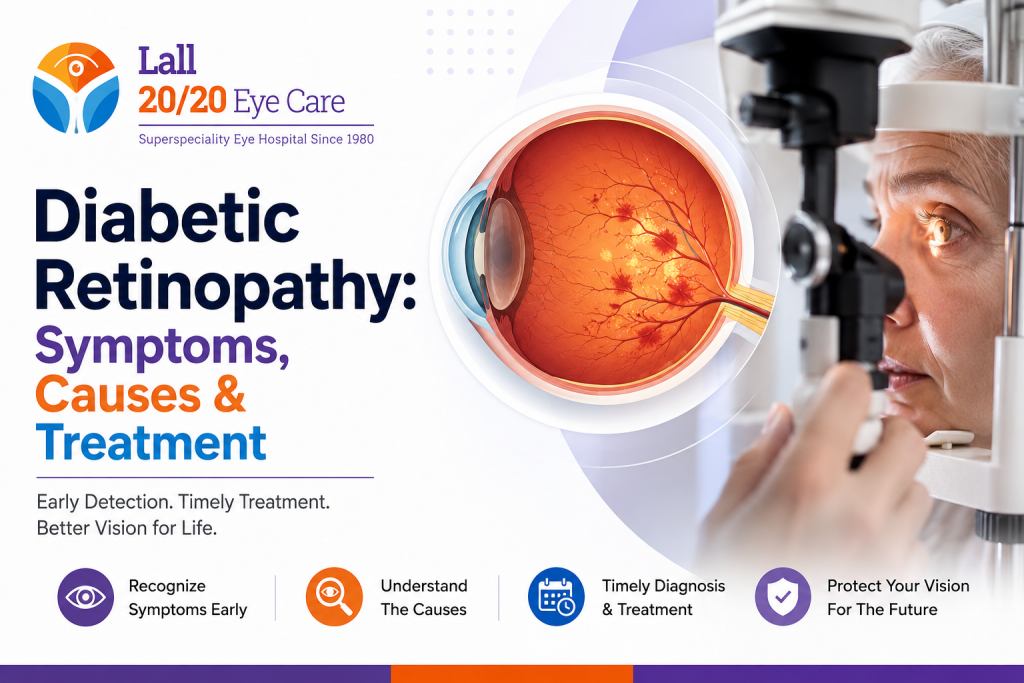
First Things First: What is Diabetic Retinopathy?
It’s all located at the very back of the eye – a screen made of soft tissue that is where all of the light is projected and sent into your brain. That is what allows you to actually be able to see.
If diabetes is poorly managed over time, high blood glucose levels lead to destruction of the fine capillaries supplying blood to the retina.
In time, these vessels may
- Bleed
- Swell
- Dilate
- Become blocked
- Stimulating new
- Abnormal growth of fragile blood vessels
The cumulative damaging effects of the disease are called Diabetic Retinopathy.
Since the damage occurs very slowly, there are normally no symptoms in the early stages to indicate that anything is wrong.
Symptoms That Should Never Be Ignored
With more progression of diabetic retinopathy, some warning signs might begin to manifest. The trickiest thing about diabetic retinopathy is that initially your vision may seem totally normal.
However, some may include:
- Floaters that appear blurry or jiggle down-focus blurring (especially when reading)
- Difficulty seeing at night
- Floaters as dots or threads
- A blind spot in one or both areas of vision
- A sudden decrease in sight in one or both eyes.
Such symptoms may not necessarily be indicators of bad diabetic retinopathy, but a definite reason why you should look for one immediately.
Who Is at Greater Risk?
Not everybody with diabetes will develop diabetic retinopathy, but some factors do put someone at higher risk of damaging the retina. This risk is higher in those who
- Have suffered from diabetes for a few years
- Have uncontrollable blood sugar levels
- Have high blood pressure
- Have high cholesterol
- Have been smoking
- Are pregnant with diabetes
- Have missed routine eye tests
The longer diabetes remains uncontrolled, the greater the risk of retinal complications.
How Often Should an Eye Test Be Done?
This is one of the most frequently asked questions. In general:
As diagnosed by your physician, if you are
- Diabetic type 1 or type 2, you are to start your eye screening a few years after being diagnosed.
- If type 2 diabetic, you should first have a thorough eye exam at once, as retinal changes may begin appearing early on.
- The rest of the diabetic patients must be provided with a regular retinal review each year, or more frequently depending on the case.
The exact schedule should always be decided by an eye specialist.
What Happens During Diabetic Eye Examination?
Most people avoid going for eye tests as they think they will be unpleasant. Diabetic retinal screening is a simple and pain-free examination, which may involve.
- Vision assessment
- Eye pressure measurement
- Dilated retinal examination
- Digital retinal photography
- OCT (Optical Coherence Tomography)
- If required, additional retinal imaging when necessary
These tests allow ophthalmologists to detect even very early retinal changes often before vision is affected.
Understanding the Stages of Diabetic Retinopathy
Diabetic retinopathy does not develop quickly. In fact, with early diagnosis, it is a manageable condition that can really benefit from it.
- Mild to Moderate non-proliferative diabetic retinopathy (NPDR)
This is the earliest stage where small blood vessels in the retina lose their integrity. Pouchings can form in the blood vessels (micro-aneurisms) along with some blood/fluid leakage from them into the retina. At this stage, the vision may be completely normal.
- Severe Non-Proliferative Diabetic Retinopathy
As more blood vessels become blocked, parts of the retina receive less oxygen and nutrients. The retina begins sending signals for new blood vessels to grow. Without treatment, the condition can progress further.
- Proliferative Diabetic Retinopathy (PDR)
This is the late stage. New blood vessels start to appear on the surface of the retina. Although this appears to be the body attempting to repair, the vessels produced are incredibly fragile and can bleed readily. The effects of the bleeding could include;
- Sudden vision loss
- retinal scarring
- retinal detachment
- permanent vision damage if not treated promptly
What is Diabetic Macular Edema (DME)?
A related disease to diabetic retinopathy and a very commonly seen association is Diabetic Macular Edema (DME). The macula is the central and responsible retinal region for clarity and fine detail. If fluid leaks from the damaged blood vessels into the macula, the latter begins to swell. This process leads to:
- Blurred central vision
- Difficulty reading
- Problems recognizing faces
- Distorted vision
DME can occur at any stage of diabetic retinopathy and requires timely treatment.
Can Diabetic Retinopathy Be Treated?
Yes, it is.
Retinal damage is not always fully reversible, but modern ophthalmology has developed ways to control the disease and retain/improve vision and outcomes. Depending on the stage, the approach varies. Some procedures are advised generally:
Laser therapy may be used to seal leaking blood vessels and control abnormal growth of new ones. Eye injection: A type of drug can be injected into the eye to control the growth of new, leaky blood vessels and to reduce swelling.
Surgery: For people who have had a serious bleeding episode into the eye or a retina that has become detached, surgery may be considered an option for their vision restoration.
Prevention Always Starts with Diabetes Management
The healthiest retina begins with better diabetes control. Although diabetic retinopathy cannot always be prevented completely, its progression can often be slowed with consistent care. Simple habits make a difference.
Keep blood sugar under control
Stable glucose levels reduce stress on retinal blood vessels.
Monitor blood pressure
High blood pressure accelerates retinal damage.
Manage cholesterol
Healthy cholesterol levels support better blood vessel health.
Stay physically active
Regular exercise supports overall diabetes management.
Follow medications consistently
Skipping diabetes medication can increase long-term complications.
Never skip annual eye examinations
Perhaps the most important preventive step of all.
Remember: Good vision isn’t proof of healthy retina. Only a comprehensive retinal examination can detect early diabetic eye disease.
When Should an Eye Specialist Be Consulted Immediately?
While regular check-ups are beneficial, there are also more serious symptoms that should prompt you to see a doctor immediately.
Do this if you experience any of these:
- Sudden decrease in sight
- A sudden increase in new “floaters” in the eye
- Any flashes of lights
- Severe blurry vision or a shadow like a “curtain” descending in front of you
- Or any of the following if you have diabetes and persistently develop eye discomfort.
Early attention is usually best for preserving vision.
Advanced Retinal Care at Lall 20/20 Eye Care
You need to monitor eye complications from your disease closely. Lall 20/20 Eye Care has the diagnostic technology and specialized approach to diagnose, monitor diabetic retinopathy, and protect vision before damage occurs.
We work with a wide variety of treatments to create a personalised treatment regimen that best suits our patients’ unique visual requirements and stage of diabetic eye condition; all focused on the simple premise – protecting vision while we still can.
Final Thoughts
Diabetes is not merely about blood sugar – it also has the insidious potential to deteriorate the health of your eyes well before any signs or symptoms appear.
It is for this reason that Diabetic Retinopathy demands to be taken as seriously as every other aspect of your diabetes. Through regular eye exams, healthy living, effective blood sugar management and prompt treatment, vision can be preserved for many years – and eyesight simply means too much to postpone check-ups until a problem is apparent.
In fact, the most critical eye test is often one which you undergo when nothing seems to be wrong at all.
Frequently Asked Questions
- Can I get diabetic retinopathy with perfect normal vision?
Yes, the early stages of diabetic retinopathy may have no symptoms. This is why annual retinal eye screening for all people with diabetes is very important.
2. How do you become susceptible to diabetic retinopathy?
Longer duration of disease, poorly controlled blood sugar, high blood pressure, high cholesterol or smoking are all factors that may place a person with diabetes more at risk for the development of retinal disease.
3. Is retinal disease irreversible?
The retina can only to a certain degree be fully restored once disease processes have begun, however early detection and intervention can prevent rapid progression, allow for the retention of vision, and minimize visual loss to severe problems.
4. How frequently do you need to have an eye exam if you have diabetes?
You will likely need an eye exam at least once per year, and possibly more depending upon the condition of your retinas.
5. Will the test for retinal screening be painful?
No, a diabetic retinal screening eye examination is painless. Some specialized tests of the retina may require the use of dilating eye drops which may produce temporary blurred vision that may affect reading for up to four hours, but the screening does not hurt.