
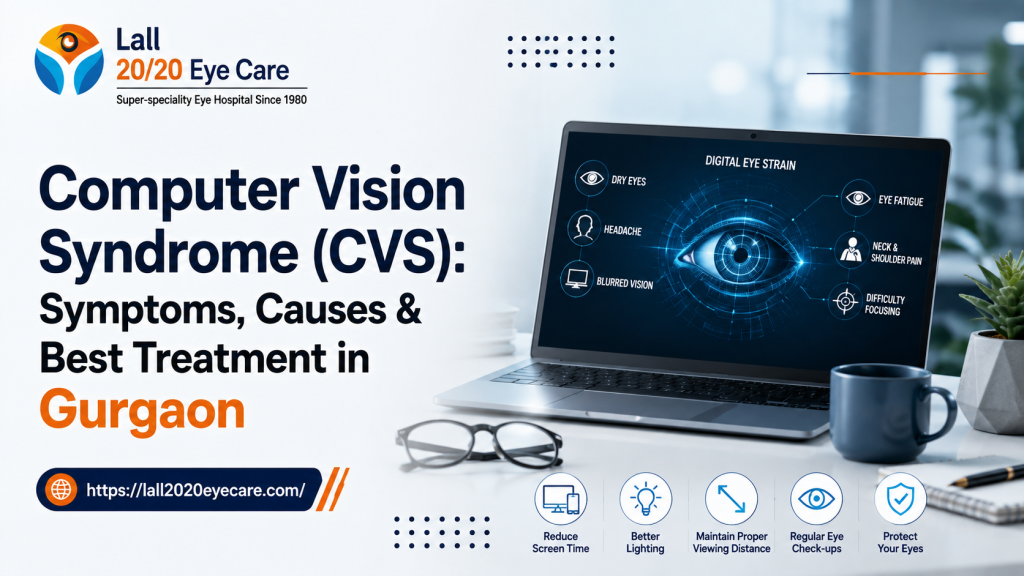
In today’s world, most of the world is getting online, so screens are everywhere now: at the office, in the classroom, on the couch scrolling through social media, and consistent visuals quietly create a health issue most people aren’t aware of until it starts bothering them: Computer Vision Syndrome (CVS), often called Digital Eye Strain.
It mostly affects IT workers specifically, but that’s not really the case anymore. Students sitting through online classes or staring at digital screens, people who are working from home, gamers, business owners, even young kids- all of them can end up dealing with symptoms.
Catching the signs early and getting early treatment for Computer Vision Syndrome treatment in Gurgaon, that tends to save people a lot of unnecessary discomfort down the line.
What is Computer Vision Syndrome?
It’s an eye and vision problem that builds up from spending too much time on computers, laptops, tablets, and phones.
The paper didn’t get close nearly as much as the screen does. Constant focusing, blinking less than usual, and sitting in a less-than-ideal posture affect the visual system and end up more strained than most people realise, and that strain shows up as fatigue.
Computer Vision Syndrome isn’t a permanent disease. But brushing off the symptoms for too long can start affecting how someone gets through their day.
Common Symptoms of Computer Vision Syndrome
These symptoms come slowly, usually becoming serious only after several hours stuck to a screen. Here are the symptoms
- Eye strain or tired eyes
- Blurred vision
- Dry or watery eyes
- Burning or itching sensation
- Headaches after screen use
- Difficulty focusing
- Increased sensitivity to light
- Neck, shoulder, or back pain from poor posture
- Frequent eye rubbing
- Occasional double vision
Note: A short break usually helps, at least temporarily, though the symptoms tend to creep right back once the screen goes back on.
Why Does Computer Vision Syndrome Happen?
Digital Eye Strain can arise from a combination of factors that come together:
Reduced Blinking
People blink roughly half as often while staring at a screen. That alone speeds up tear evaporation, leaving the eyes dry and irritated.
Continuous Focusing
Screens force the eye muscles to stay locked onto one focal distance for long stretches, and that sustained effort wears them down over time.
Screen Glare
Light bouncing off windows, overhead fixtures, or a glossy display makes the eyes work harder than they should have to.
Poor Ergonomics
Sitting wrong, having the screen at the wrong height, or sitting too close or too far, all of it adds strain, both to the eyes and to the body more broadly.
Uncorrected Vision Problems
Even mild issues like nearsightedness, farsightedness, or astigmatism tend to become far more noticeable once someone’s staring at a screen for hours on end.
Excessive Screen Time
At the end of the day, long uninterrupted stretches without breaks are usually the single biggest culprit here.
Who gets affected by Computer Vision Syndrome more?
Technically, anyone with a screen habit can end up with CVS. But some groups run into it more than others, including:
- Office professionals
- Students attending online classes
- Software developers
- Graphic designers
- Gamers
- Content creators
- People working from home
- Adults over 40 dealing with age-related focusing changes
Kids aren’t immune either; heavy smartphone or tablet use is pushing digital eye strain into younger age groups more than ever before.
Can Computer Vision Syndrome Damage Eyes Permanently?
There’s a pretty persistent myth floating around that CVS leaves lasting damage behind.
That’s not really backed by the evidence, though. CVS itself doesn’t cause permanent harm to the eyes. What it can do, if it’s ignored long enough, is turn into a chronic nuisance, one that eats into productivity, focus, and general quality of life. And sometimes, ongoing discomfort is actually a sign of something else going on that genuinely needs a proper look from an eye doctor.
Simple Ways to Reduce Digital Eye Strain
A few small habits go a surprisingly long way here.
Follow the 20-20-20 Rule
Every 20 minutes, glance at something around 20 feet away for at least 20 seconds. It gives the focusing muscles a proper break.
Blink More Often
Making a conscious effort to blink keeps the eyes lubricated and cuts down on dryness.
Adjust Screen Position
Keep the screen roughly an arm’s length away, with the top of the monitor sitting just below eye level.
Improve Lighting
Cutting glare and balancing the room’s lighting takes real pressure off the eyes.
Increase Font Size
Bumping up the text size means less squinting and less strain overall.
Stay Hydrated
Drinking enough water supports normal tear production.
Limit Continuous Screen Time
Short, frequent breaks tend to do more good than saving it all up for one long break later.
When Should Medical Attention Be Considered?
A bit of eye fatigue after a long day at the screen is nothing unusual, honestly. It’s worth getting checked out, though, if the symptoms:
- Stick around despite regular breaks
- Keep happening more often
- Start interfering with work or studies
- Involve ongoing blurred vision
- Come with severe headaches
- Cause real discomfort
At that point, an eye exam is really the only way to tell whether it’s CVS or something else entirely going on.
Diagnosis of Computer Vision Syndrome
A thorough eye exam is the starting point, and it typically covers:
- Vision assessment
- Refraction testing for glasses
- Dry eye evaluation
- Eye muscle balance assessment
- Screen use history
- Lifestyle evaluation
How someone actually uses screens day to day often ends up being the key clue in figuring out what’s really going on.
Computer Vision Syndrome Treatment in Gurgaon
There’s no single fix here. What works depends on the person’s specific symptoms and what’s driving them.
Some of the more common approaches include:
Prescription Glasses
Purpose-built computer glasses take a load off the eyes during long digital work sessions.
Lubricating Eye Drops
Artificial tears ease dryness and make everyday screen use noticeably more comfortable.
Dry Eye Management
For more serious dryness, a more advanced dry eye treatment plan might be the better route to go.
Vision Correction
Getting an updated prescription, or corrective lenses in general, often makes a real difference.
Workplace Ergonomic Advice
Small tweaks to posture, monitor height, and lighting can ease symptoms more than most people expect.
Lifestyle Modifications
Less unnecessary screen time, actual scheduled breaks, and better sleep, all of it adds up to healthier eyes over time.
Expert Eye Care at Lall 20/20 Eye Care
Quick fixes only go so far with Computer Vision Syndrome. Getting to the actual root of persistent eye strain is what makes a real, lasting difference.
At Lall 20/20 Eye Care, Gurgaon, eye evaluations are carried out using advanced diagnostic tools to check for digital eye strain, dry eyes, refractive errors, and other vision concerns. Every treatment plan is built around the individual, whether that’s a child, a working professional, or an older adult, with the focus staying on both comfort and long-term eye health.
Expert Note
A lot of people chalk up frequent headaches to stress or bad sleep alone. More often than most realise, digital eye strain and uncorrected vision issues are quietly behind it too. A regular eye exam remains one of the easiest ways to stay ahead of it in a screen-heavy world.
Conclusion
Computer Vision Syndrome has turned into one of the most common eye complaints tied to modern life. It’s very manageable and catching it early alongside the right treatment can spare a lot of needless discomfort while keeping productivity intact.
A handful of preventive habits, paired with regular eye checkups and timely care, go a long way toward keeping vision healthy even as screen time keeps climbing.
Frequently Asked Questions (FAQs)
What is Computer Vision Syndrome?
It’s a group of eye and vision problems that come from spending too much time on computers, smartphones, tablets, and other digital screens.
Is Computer Vision Syndrome permanent?
No, it’s usually temporary and tends to improve with proper eye care, regular breaks, and the right treatment.
Can blue light cause Computer Vision Syndrome?
Mostly it comes down to prolonged focusing, reduced blinking, and general screen habits rather than blue light on its own, though blue light can add to the discomfort for some people.
How is Computer Vision Syndrome treated?
Treatment can involve computer glasses, lubricating eye drops, dry eye management, an updated prescription, ergonomic changes, and better screen habits overall.
Who should get evaluated for Digital Eye Strain?
Anyone dealing with frequent headaches, blurry vision, dry eyes, or fatigue after screen use should get a proper eye exam.
Where can Computer Vision Syndrome be treated in Gurgaon?
Lall 20/20 Eye Care offers a full evaluation and personalised Computer Vision Syndrome treatment in Gurgaon, using advanced diagnostic methods to assess digital eye strain, dry eyes, and other vision related concerns.